Recap: Private cBridge networking meetup on toxic flow
BySpotware team
22 Jun 2026•8 min read
Share this post
cBridge hosted a private networking meetup in Limassol, bringing together brokerage leaders, commercial decision-makers, dealing executives and risk specialists. The agenda was focused on how brokers stay competitive as execution becomes more complex and larger financial institutions move into the same space.
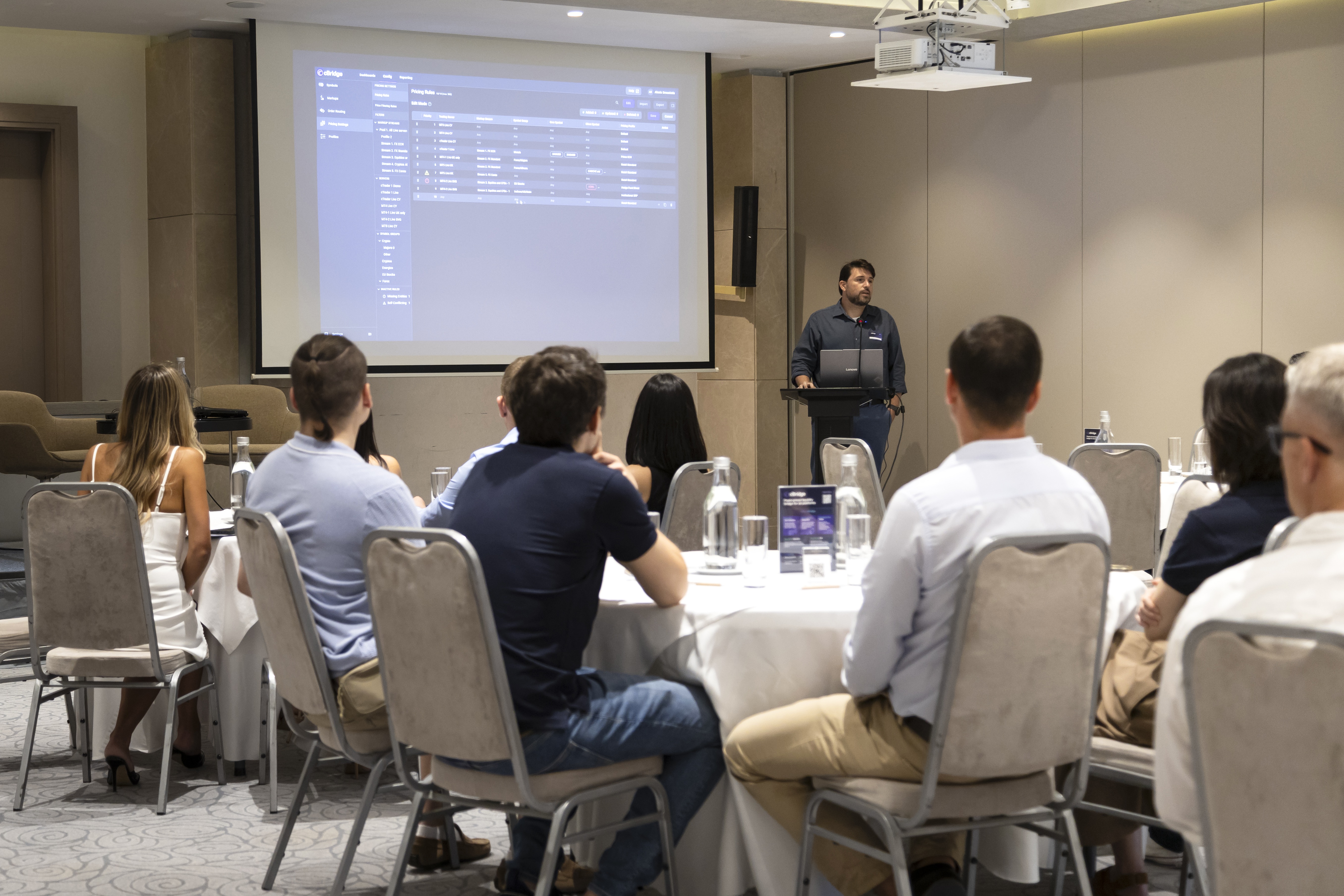
The event included the presentation of cBridge, Spotware’s standalone fixed-price liquidity bridge. During the presentation, Alexis Droussiotis, co-General Manager at cBridge, explained how the solution addresses common broker pain points such as limited transparency, heavy configuration, unclear LP performance, traditional volume-fees pricing and operational complexity.
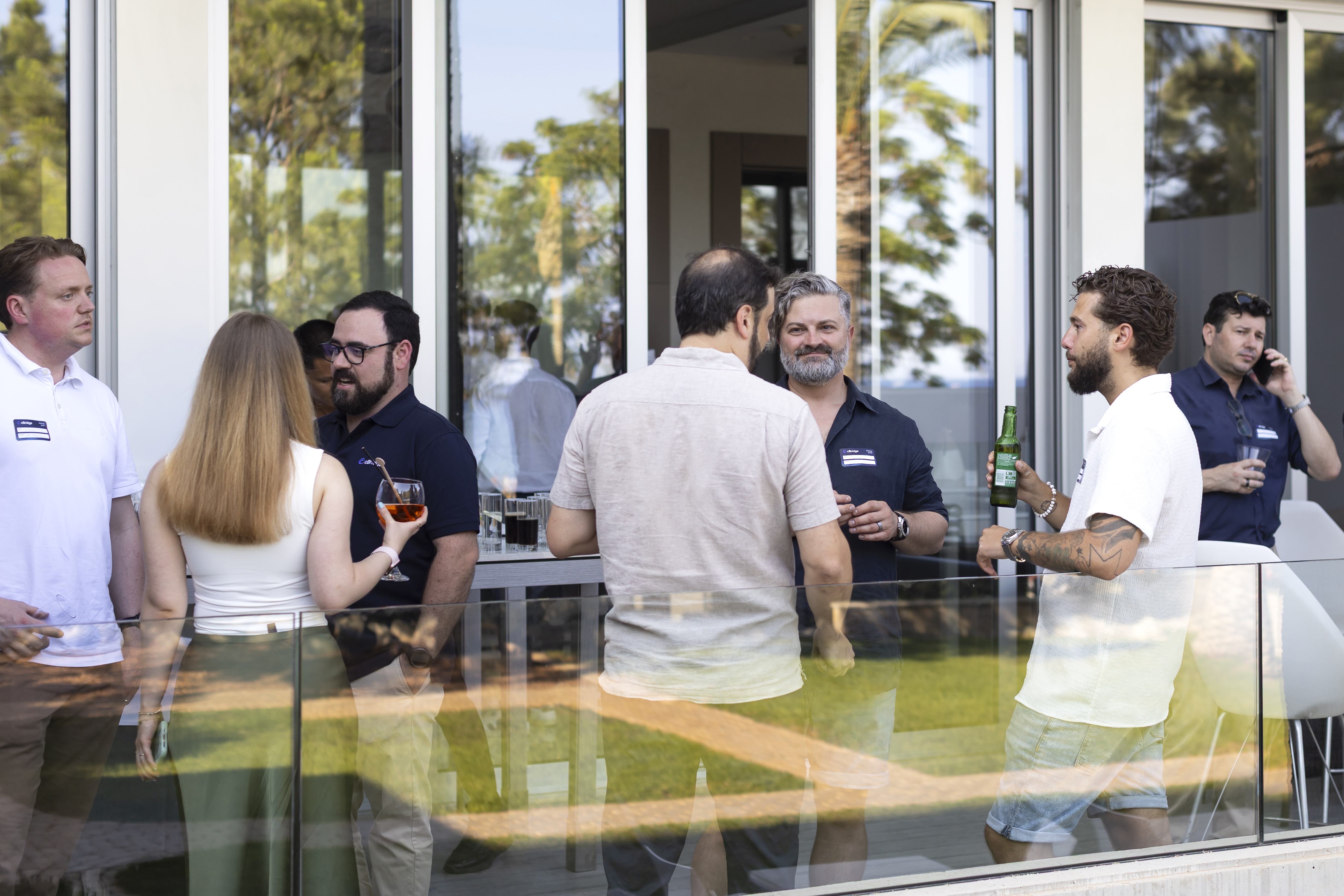
Networking was a big part of the evening. Guests continued the conversation over drinks and light bites, sharing their thoughts on today's challenges in a relaxed atmosphere with a sea view. As a small memento, guests could take home a Polaroid photo and a personal prediction card.
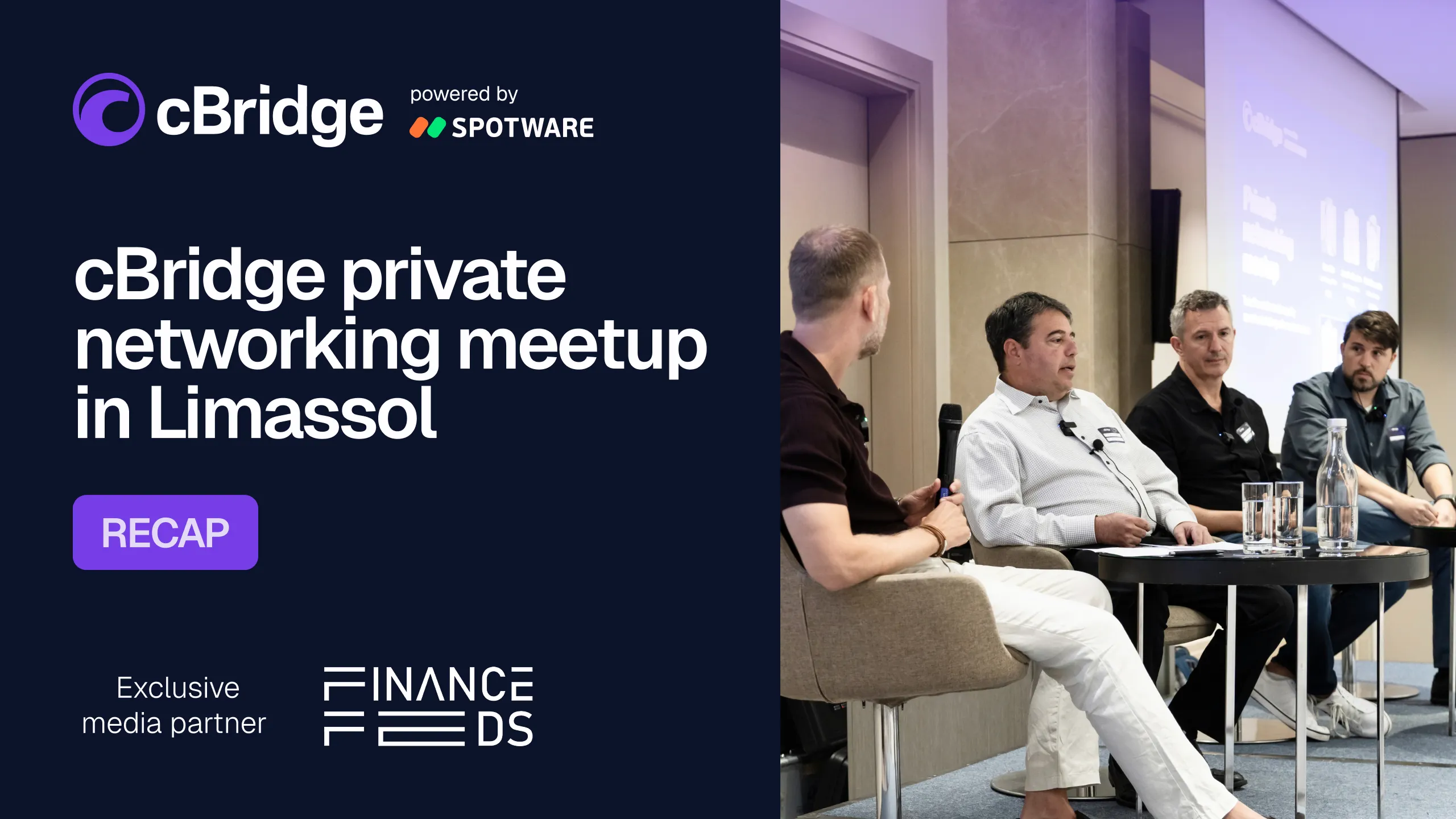
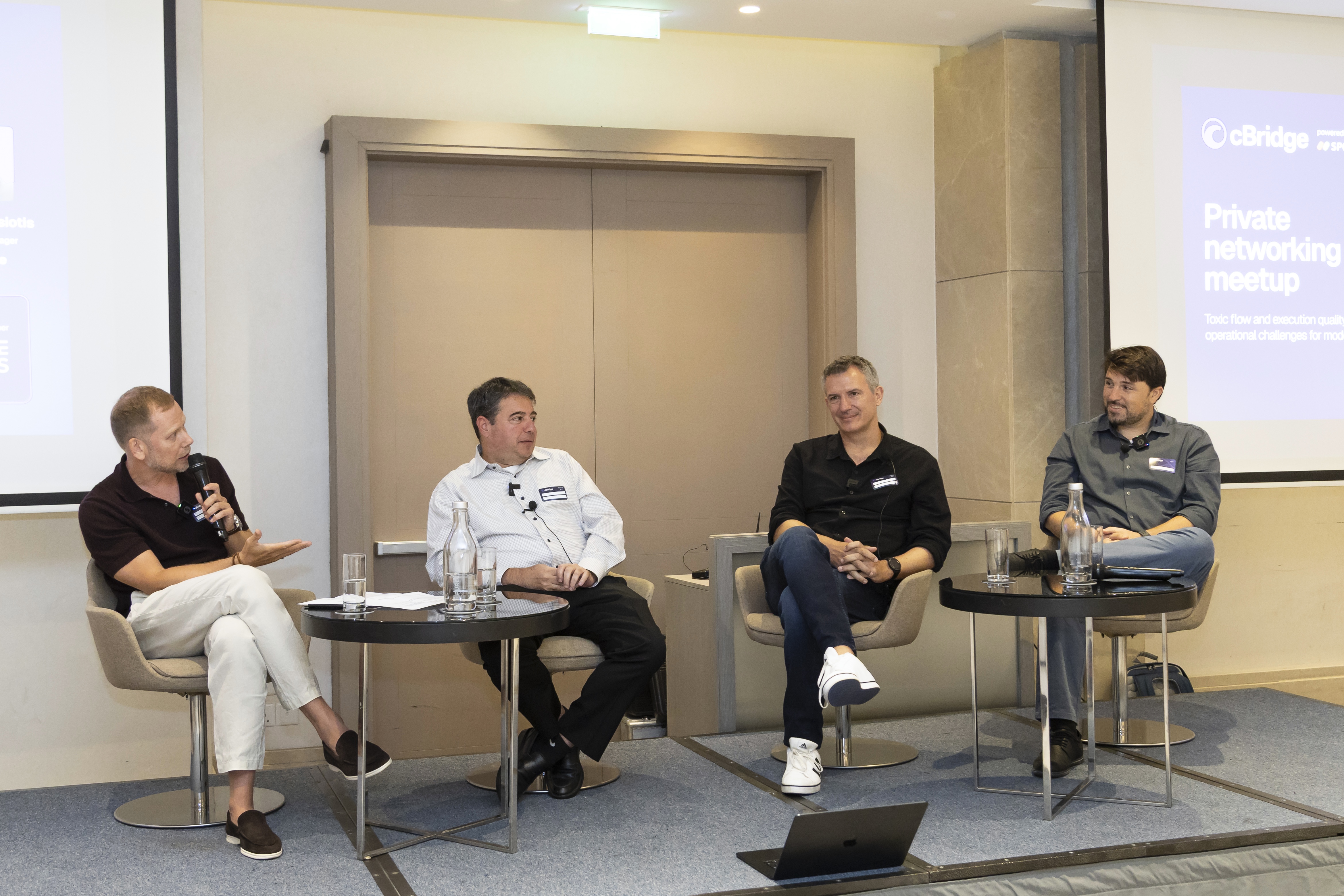
One of the main items on the agenda was a roundtable discussion, “Toxic flow and execution quality: operational challenges for modern brokers”, featuring Drew Niv, Chief Strategy Officer at ATFX, Jonathan Squires, CEO at Tapaas, and Alexis Droussiotis, co-General Manager at cBridge by Spotware. The discussion was moderated by Nikolai Isayev, Editor-in-Chief at FinanceFeeds.
How would you define toxic flow today?
Drew Niv gave a direct definition: "It's the flow that you cannot monetise," he said. But he was quick to add: what counts as toxic depends entirely on the broker's business model, execution framework and the ability to manage different types of trading activity. A flow that one firm cannot handle might be perfectly manageable for another.
Jonathan separated out two categories. The first – consistently profitable traders. The second – and in his view the truly toxic kind – involves trading behaviour that systematically takes advantage of technical or pricing weaknesses. One example was external arbitrage. "We saw 29,000 accounts in one day doing external arbitrage between two of our brokers," he said.
Alexis preferred a different term – "unwelcome flow". He drew a distinction between retail and institutional forms: in retail trading, the issue often centres on stale pricing, while institutional participants bring automation, superior infrastructure and better access to market data.
The speakers agreed on one point: visibility and monitoring have become central to addressing the problem. Toxic flow is no longer just a dealing desk issue. It has become a technology and infrastructure challenge.
Brokers are leaking millions, but most of it is avoidable
"Every broker leaks millions of dollars to toxic flow every year," Drew said. For larger firms, that figure runs into the tens of millions. But his point was that many of these losses are surprisingly preventable.
The clearest example was market data. Brokers offering products linked to futures markets often fail to monitor the underlying markets closely enough. "If you are pricing a CME-based instrument like gold, like S&P 500, you have to have a futures feed too," Niv argued. Relying solely on LP pricing without checking the base data creates blind spots that can be quickly identified.
"I think there is a one to two million dollar investment that probably doesn't erase all of the leakage, but erases 80% of it", he noted. “Like feeds, real-time analytics, fast connections to base data”.
The urgency has grown sharply in recent years. Five years ago, this kind of setup required a development team. "We had customers that had five programmers," Niv said. Today, that same capability is accessible to almost anyone. For brokers, closing this gap often requires serious infrastructure investment, while the tools used to run latency-sensitive or external arbitrage strategies can cost around five hundred dollars a month. "The amount of people who will be able to take advantage is about to rise exponentially." Brokers who haven’t invested in their infrastructure are now trying to keep up with toxic flow patterns that are becoming harder to monitor.
The issue gets harder to control as brokers grow. Jonathan noted "At this moment, we are not ready to scale without a lot of leakage in the corners." There is no perfect solution, he admitted, but there are meaningful steps a broker can take.
For Alexis, this starts with the bridge and the infrastructure around it: a setup that can grow with the brokerage, reliable hosting in Equinix data centres, and, first and foremost, full visibility at all levels. A broker also needs to be able to identify underperforming LPs quickly and standardise all the operations.
Who actually owns the toxic flow problem?
Squires admitted that the trading team tends to absorb most of the blame. But the real question is where that toxic flow comes from in the first place, and that points back to acquisition, sales and marketing. He believes the teams should know their clients at source, so the broker can see the pattern earlier, not only when the trading team starts detecting losses.
For Squires, this is also a data problem. He was firm that brokers need a single source of truth. AI and BI teams should be standardising data across the business, not working from fragmented systems that produce conflicting pictures.
On the question of automation – can toxic flow be handled automatically without creating operational complexity? – Jonathan outlined two approaches. The first is to remove the flow entirely and accept the loss. The second is to move those clients into a setup that suits their behaviour more appropriately. What matters, he stressed, is that a broker should remain within the boundaries of fair execution practice.
Drew added a perspective that challenged the framing of the original question. The majority of what brokers label as toxic flow, he argued, is actually hedgeable. It gets misclassified. "We throw so much volume away," he said. Brokers try to process all flow through identical frameworks, when different flow types require different solutions entirely.
Why brokers stay loyal to infrastructure they've outgrown
Alexis was asked directly: why is migration hesitation still such a major blocker for brokers looking to modernise their infrastructure?
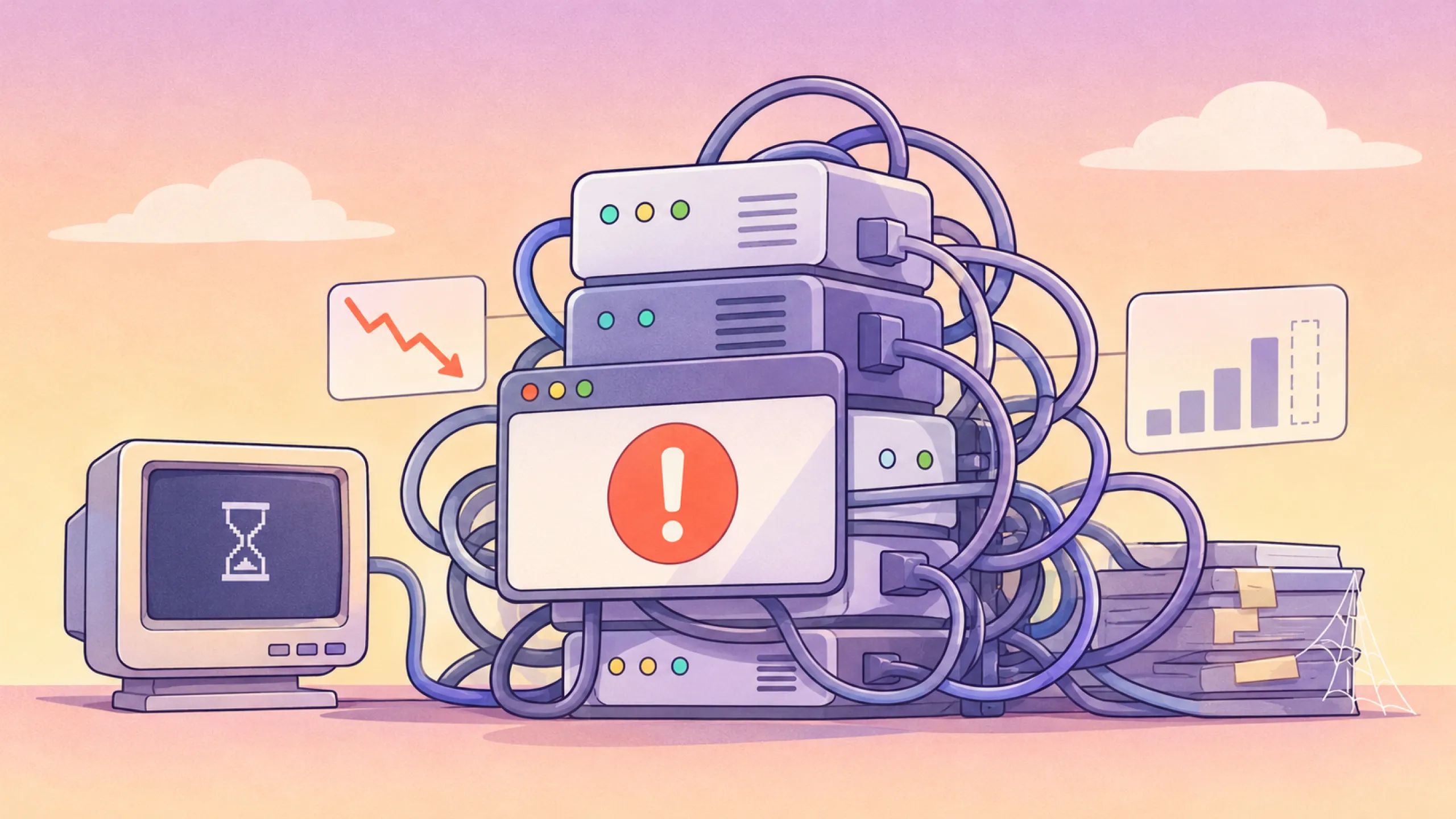
His answer had two parts. The first is technical. A bridge is at the core of execution. Configuration builds up in layers over years: routing rules, LP connections, platform integrations, custom workarounds. Eventually it becomes so complex that only one or two people in the organisation truly understand it.
The second reason is human. The people closest to the existing system have built their working lives around it. Change feels risky to them, even when the system is creating inefficiencies. The challenge, Alexis noted, is that employees tend to evaluate these decisions from their own perspective rather than a CEO's or founder's. The person carrying the operational risk and the person making the business case are often not looking at the decision in the same way.
On pricing, Alexis noted that most bridge providers charge volume-based fees. The stronger your month, the bigger your infrastructure bill. "Why should we penalise the broker for his growing volume?" cBridge operates on predictable pricing that doesn't scale with trading activity. "Every dollar spent on volume fees could have been a dollar spent on the growth of the company."
New standards, higher stakes
The closing question was: what should brokers demand from LPs, risk systems and bridge providers today?
Alexis outlined three non-negotiables. Real-time visibility across every layer of the bridge. Smart, intuitive workflows – not systems so complex that only specialists can navigate them. And validation: the bridge automatically checks the configuration before it is saved and flags any issues or mistakes it finds.
Jonathan highlighted that data has to be part of that standard too. Brokers are becoming more sophisticated, and the threats they face are becoming more sophisticated too. Providers need to deliver clean, reliable data. "You can spend hundreds of thousands on certain software and still not get your data out of it," he said. The responsibility is on tech providers to be accountable and responsive.
He also pointed to the fact that brokers don't share knowledge with each other. There is no common wisdom – everyone solves the same problems in isolation.
Drew’s point was that the bigger risk may not come from toxic flow at all. Brokers need to understand that their existence is genuinely at stake. The threat is companies like Binance, Kraken, Robinhood – large businesses with enormous client bases, unlimited budgets and technology infrastructure that most traditional brokers cannot match. "What if you are owned by Binance or Kraken tomorrow?"
He pointed to a broader shift already under way: roughly half of all private equity investment in SaaS software over the past 25 years is heading towards zero – displaced by AI, new models and inflated valuations that were never grounded in reality. "We have to treat it as if we are going to go out of this business, cause a lot of us might," he said.
Drew’s warning was blunt: "If we don't change, we die."
About cBridge
cBridge by Spotware is a fixed-price liquidity bridge, eliminating volume fees and hidden charges entirely. It is a platform-agnostic solution that connects MT4, MT5, cTrader and FIX API trading platforms to multiple liquidity providers. cBridge delivers real-time price aggregation, flexible order routing and integrated risk management controls, while providing exposure monitoring, execution management and reporting. Its modular architecture helps brokers scale as trading volumes grow and allows individual components to be maintained without interrupting trading. It uses transparent, infrastructure-based pricing, helping CFD brokerages reduce infrastructure costs.